

I was thinking about the (power) fantasy of playing as a Jedi, and I came up with a few things that can create interesting TTRPG dynamics involving the Force, or just ‘application of force/violence’ in general.
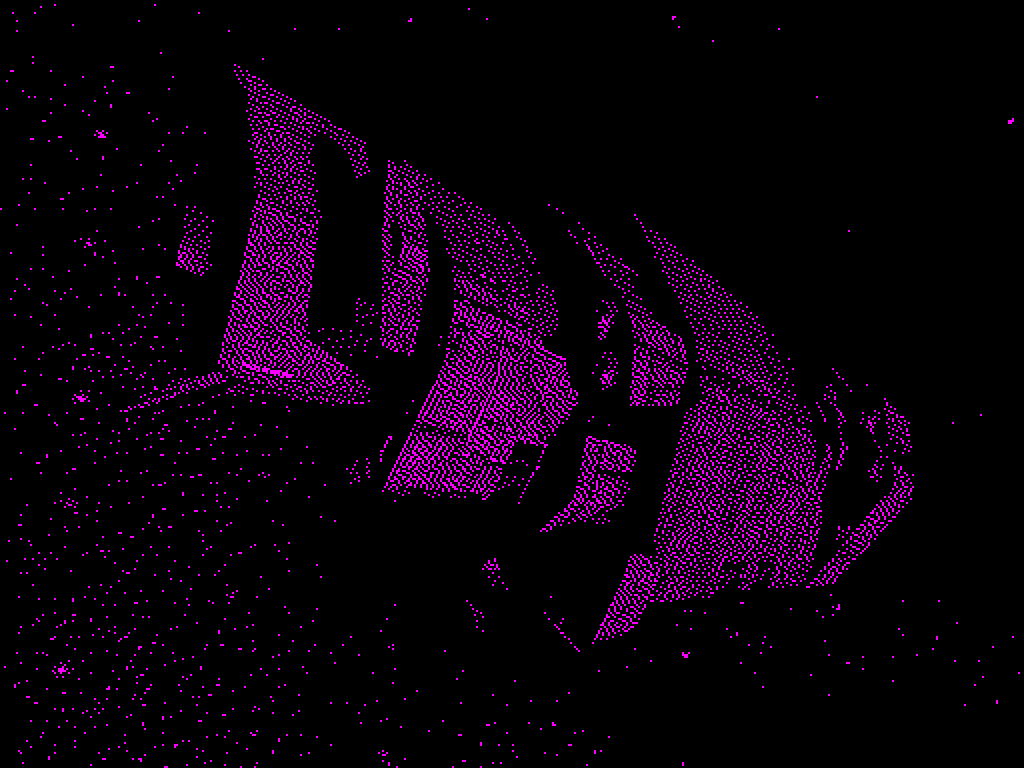
Cover image: Twisted Jedi by Max Schiller
This post is framed around Star Wars, but I think it can still work quite well in other contexts of magic and martial violence.
Oh, and I have not played the Fantasy Flight Star Wars RPGs, so I might be reinventing the wheel here. Then again, I always consider ‘reinventing the wheel’ as not necessarily a bad thing; the wheel was a pretty big invention, and there’s no shame in coming up with it on your own.
My initial thoughts/starting-off point:
- A risk of failure doing default Jedi things isn’t super interesting
- The fantasy of playing a Jedi is playing someone who is at least halfway capable
- The Force (or using magic in general) doesn’t have to be very codified, as long as the player(s) have a general understanding as to what’s on the menu. It’s more about consequences, impact, control.
- Lightsabers should feel quite powerful, and Jedi are skilled with it. If they want to kill someone, they should just be able to do so; it shouldn’t feel like swinging a glowing baseball bat.
- The interesting thing, then, comes from the consequence of violence and choice when choosing violence.
Lightsabers Are Like A Sword Without A Hilt, Except They’re Basically Only A Hilt
That’s a good place to start. My next thought: “Okay, choice when choosing violence, what could that mean?”. I came up with:
- Trying to disarm someone without harming them (i.e. attacking/destroying their weapon).
- Trying to disabling/neutralizing an attacker without killing them (i.e. a flesh wound, a severed limb).
- Straight-up killing someone.
That’s an interesting ladder of escalation. To gamify this:
Killing a normal combatant isn’t difficult; in fact, it’s nothing more than a choice.
One slice, they’re dead. Downside: You did just kill someone.
On the other end of the axis:
Disarming without harming has a difficulty or dice roll/chance attached to it.
But what happens when you fail? Missing your attack is boring. Not very Jedi. What if:
Disarming without harming is difficult. When it fails, you risk injuring your opponent, instead.
If you intend to injure (not kill) your opponent, failing means killing them, instead.
Oooh, I like this: we’ve now made the degree of violence (or force applied, if you will) an interesting choice. I’m riffing in a system-agnostic manner here, but the odds of failure are an interesting dynamic to tweak. What if we tie that to a new concept: Approach It’s how the character chooses to execute their move, and has 2 states:
- Careful. You pull the punch, measure the blow. Failure costs you.
- Decisive. You’re committed to the action, and follow through. Failure costs others.
Let’s add another concept: Training. This is simply “how consistent are you able to execute your approach.” It’s a value from 1 to 5, and you make a Training Check by rolling 1d6 equal or under to succeed. 1 is Clumsy Padawan, 5 is Veteran Jedi Master. A Training Check -1 means “Roll under or equal your Training value -1”, a Training Check +1 means “Roll under or equal to your Training value +1”. A 6 always fails. A 1 always succeeds.
Update: Small note. Using 2d6, keep lowest might be a bit less harsh.
The Training Check can be whatever you like; this is where you can bolt on the rest of a fuller RPG system, or just insert Oracle Dice! Consider it the USB port of this system. Or the API. I don’t know a lot about APIs, but it sounds clever.
So, when you attack a foe, you choose a Goal:
| Goal | Roll | Careful Failure | Decisive Failure |
|---|---|---|---|
| Kill | Training +1 | You Injure the threat. | You Kill the threat in excessive fashion. |
| Injure | Training | Superficial injury; the threat remains. | You Kill the threat. |
| Disarm | Training -1 | You’re exposed; they get an attack off. | You Injure the threat. |
“Injure” here means “seriously wounded the opponent, but they’re not immediately dying”. A serious wound to leg or limb, or a dismemberment.
I think that as is, this could still work in actual lightsaber-to-lightsaber combat as well, not just in disarming opponents with firearms.
Parry This, You Nerf Herder
What about lightsaber deflection/reflection? This concept can also be tracked in a similar fashion. Outside of Star Wars, this can be used for any kind of deflecting magic. I would say that “defending yourself without issue” should be the baseline. Our Goals here:
- Deflect Away: Angle the incoming attack at a nearby wall or floor; just anywhere that isn’t “the user” or “an innocent bystander”.
- Kill the threat: Return to sender.
- Disable the threat: A difficult move to pull off; not only deflect it at them, but also hit them where they won’t die.
| Goal | Roll | Careful Failure | Decisive Failure |
|---|---|---|---|
| Kill the threat | Training | Deflect Away | Collateral |
| Disable the threat | Training -1 | Deflect Away | You Kill the threat |
| Deflect Away | Training +1 | Minor harm | Collateral |
- Minor harm means it costs you, the user, something. You’re not necessarily injured, but you can’t keep this up forever. Maybe it forces your next move to be Decisive.
- Collateral: You hit something you didn’t intend to hit. You injure a bystander, damage something you shouldn’t.
Using The Force (or magic)
The dial here would be subtle ↔ power. I would say that, generally, when using the Force, you’re trying to be subtle by using a mind trick or by remotely pulling an object to your hand while being precise or less noticeable in your application. Alternatively, you’re focusing on power, pushing or pulling something big to make an impact.
Make a flat Training Check.
| Subtle effect | Powerful effect | |
|---|---|---|
| Careful | The natural fit. Cheap and reliable. Failure falls short. | Possible, but it costs full effort. Controlled power is exhausting. Failure falls short and you’re spent. |
| Decisive | Clumsy. On failure, the target notices: the mind trick becomes felt pressure, the nudge a visible shove. | The natural fit. Cheap in effort. Failure escalates; it turns bigger, more harmful and destructive. |
In Summary
So that’s where I’ve landed: pick a Goal, pick an Approach, and make a Training Check. Killing is easy, mercy is hard, and how you choose to fail matters as much as whether you succeed.
I framed all of this around lightsabers because that’s where the idea started, but I don’t think it needs them. Swap the saber for a longsword and the ladder still holds: knocking the blade from someone’s hand, opening up their sword arm, or running them through.
Swap the Force for a wizard’s spells and you get the same subtle-versus-power dial, with the same question of who pays when it goes wrong. I’ve left Effort deliberately vague so it can plug into whatever system you’re running.
Initially, “Approach” was “State of Mind”, with ‘Calm’ and ‘Heated’, and the idea that these are states to manage/tap into, with a dynamic of “Once Heated you can only go Calm again out of combat”, but that became a bit messy.
If you end up using any of this at your table, I’d love to hear how it plays!
While I have you here:
If you like my design here, you might also like DANGER CLOSE, a tactical military skirmish TTRPG for one or more players. It is designed to generate tense tactical decisions, stories of heroics, bravery and camaraderie, and perseverance against overwhelming forces – and the Basic Rules are free on itch.io!



Leave a Reply